
Fall Aeration & Overseeding for Fescue Lawns
If Your Grass Turns Green in Winter, This Is Your Season
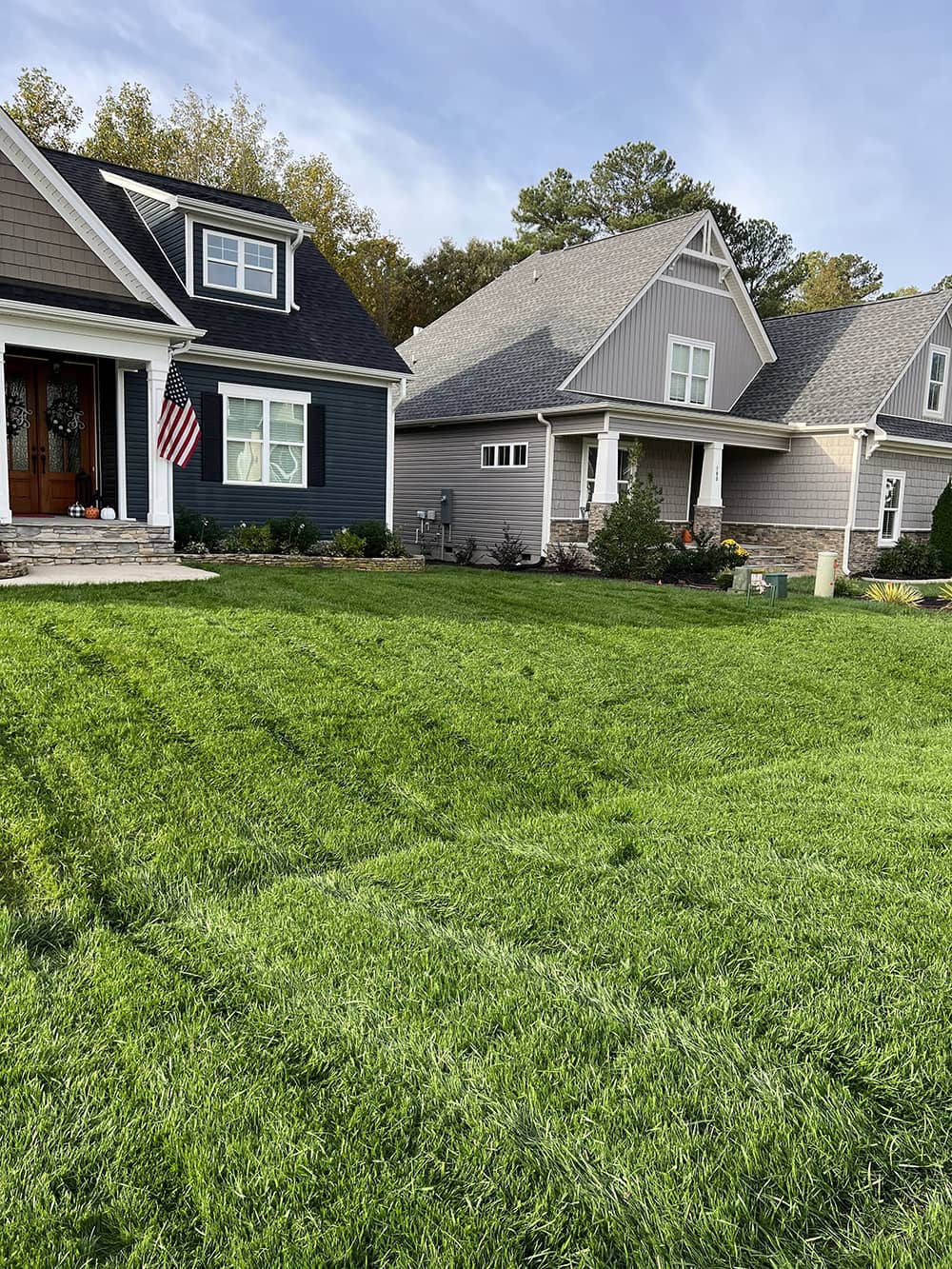
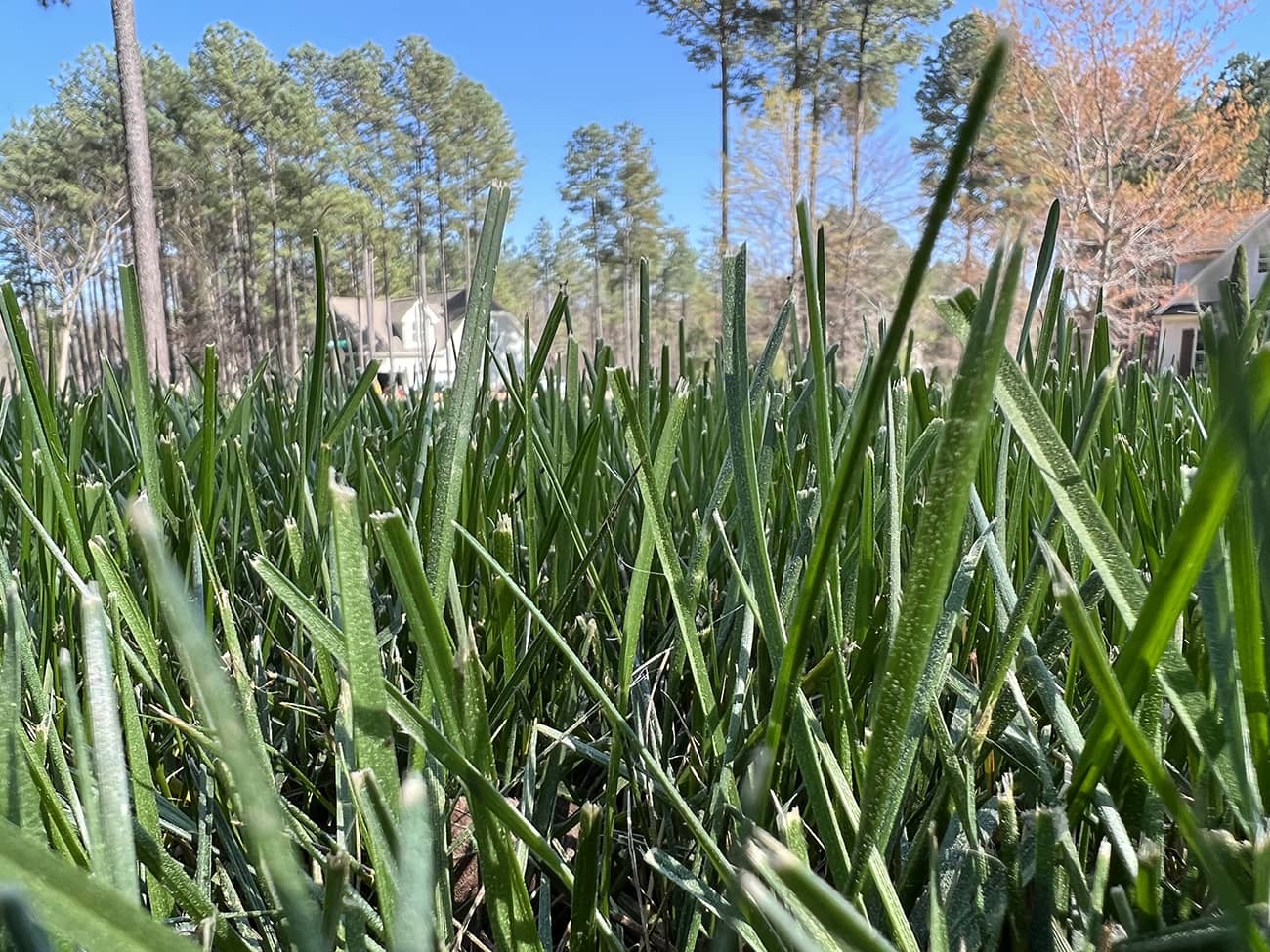
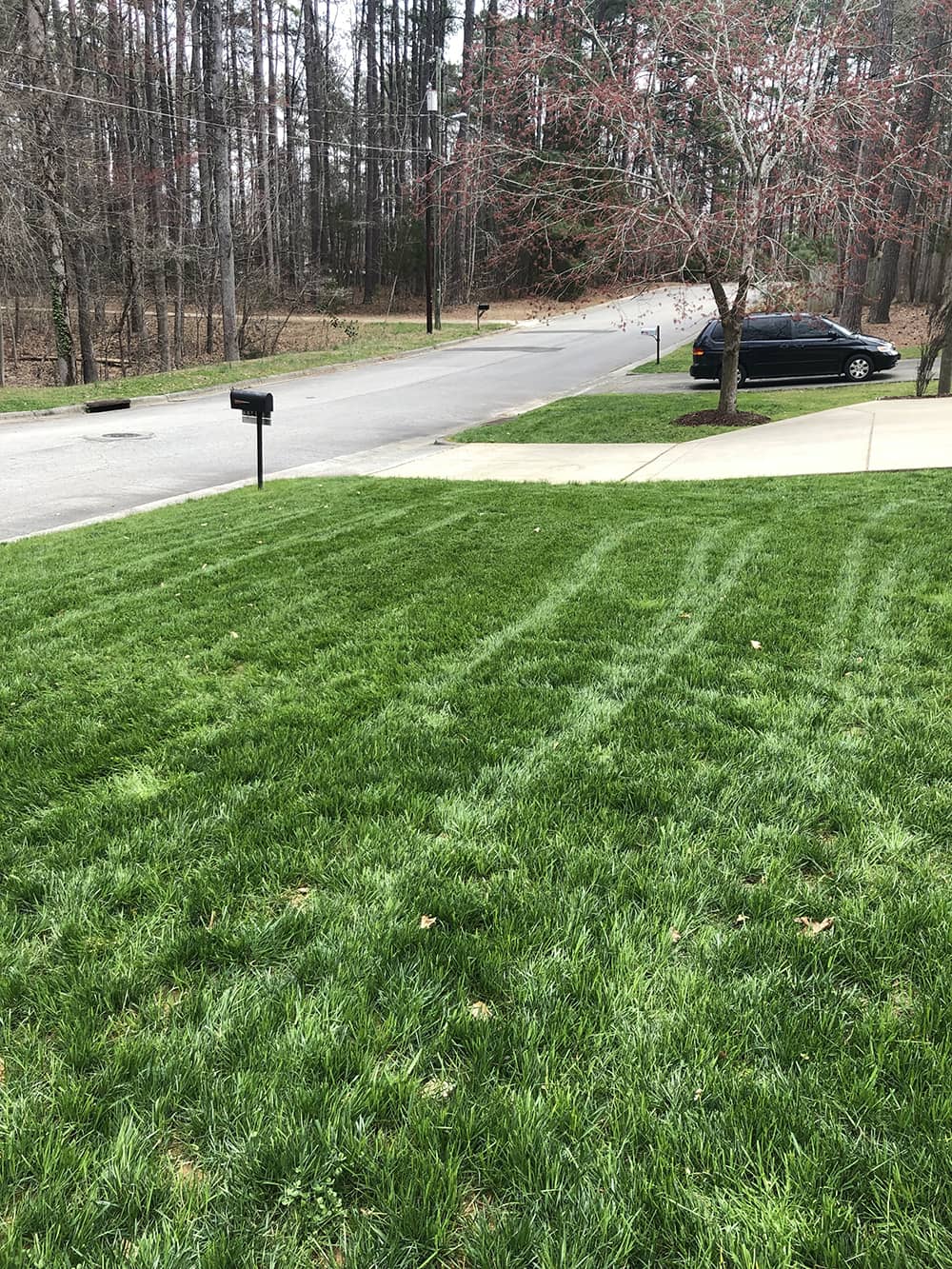
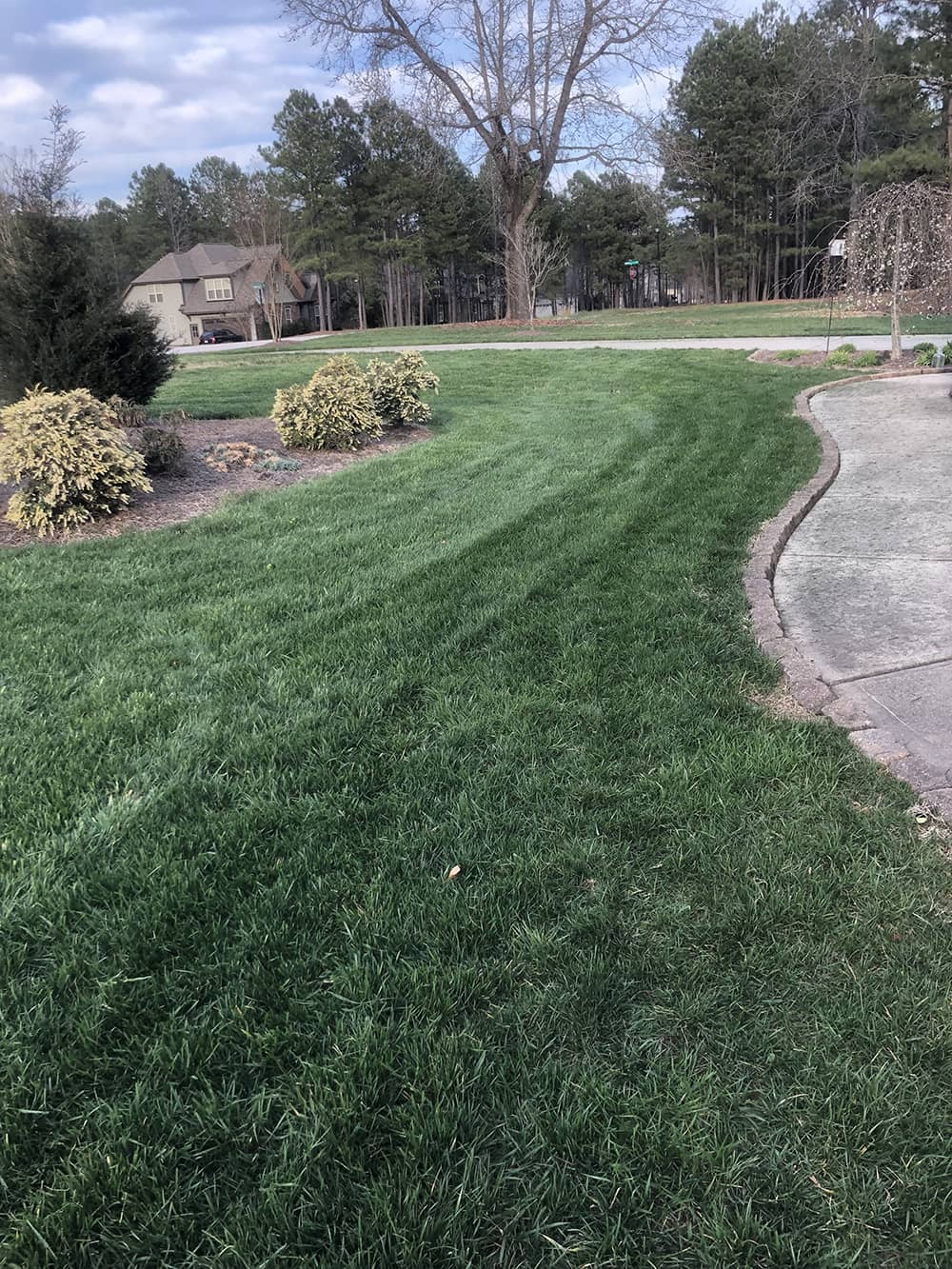
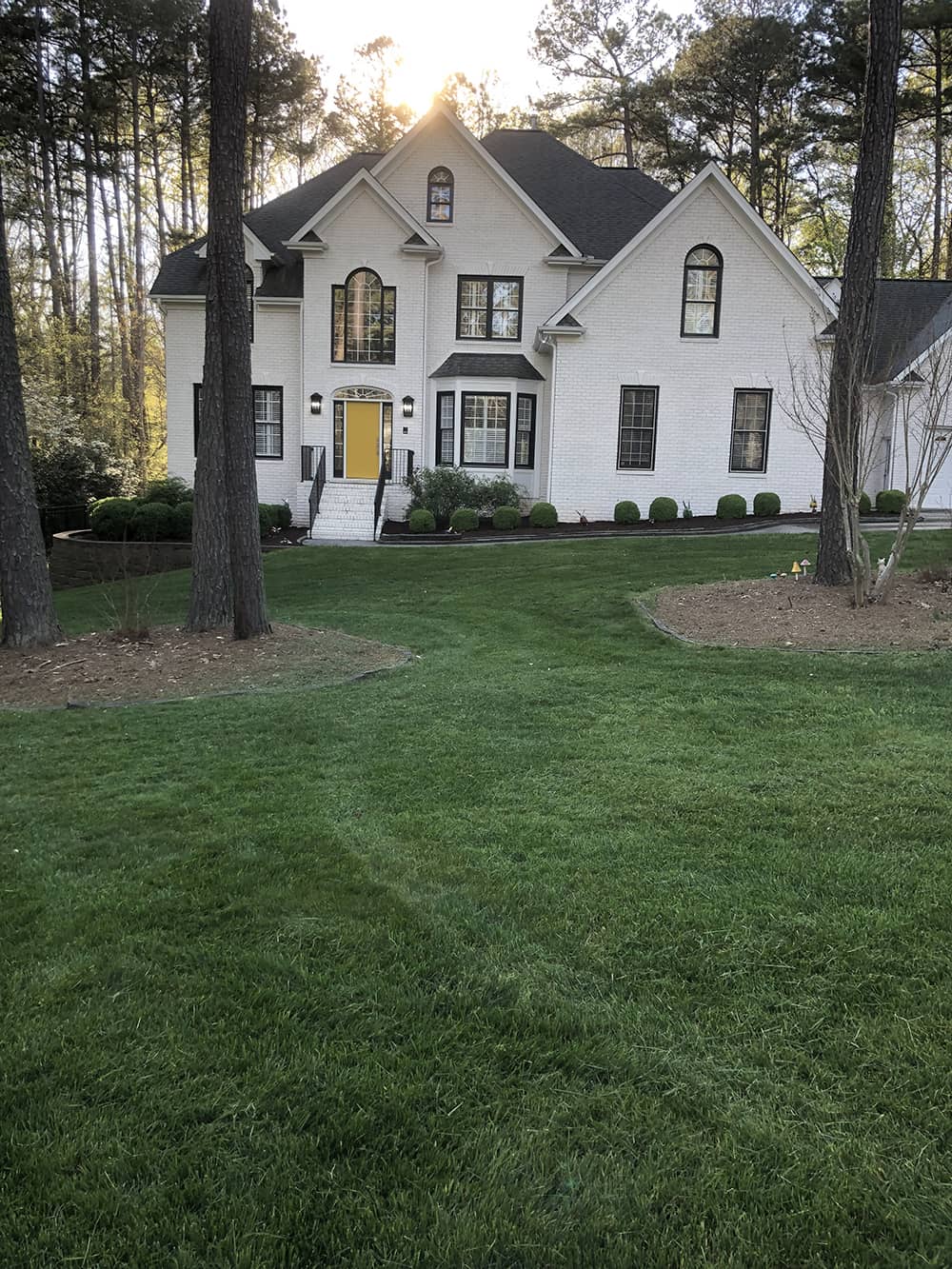
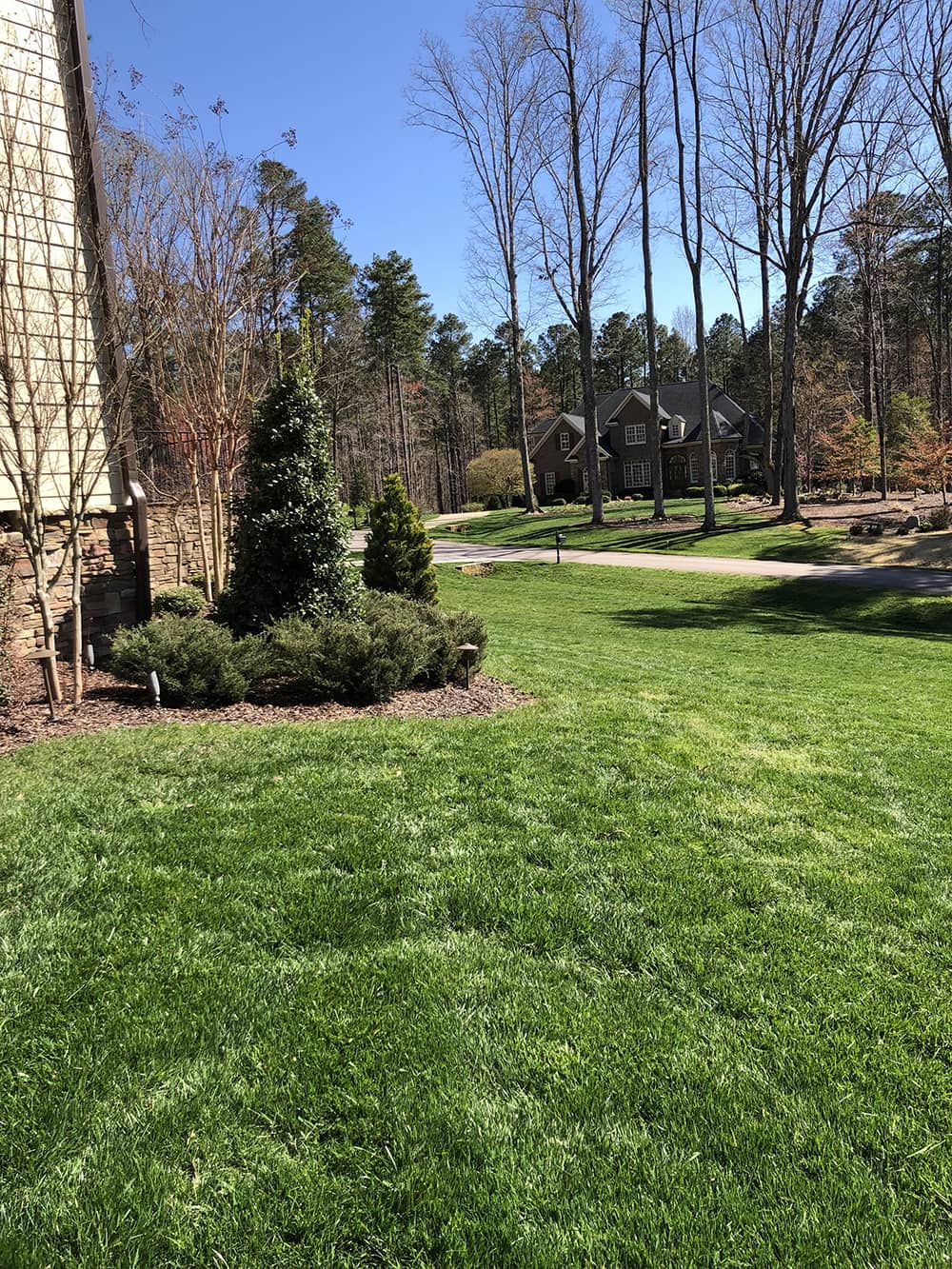
Most of Franklinton, Wake Forest, Youngsville, and North Raleigh is fescue country — a cool-season grass that thrives in fall and stays green through winter, unlike Bermuda. That means fescue lawns need a completely different care calendar than warm-season grass, and fall is when the real work happens.
Why Fall, Specifically
Fescue seed germinates best in soil that's cooling down, not heating up — which is why the ideal local seeding window runs September 25 through October 15. Seed put down outside that window either fights summer heat or runs out of time before winter dormancy, so timing isn't a small detail here — it's the difference between a thick lawn by spring and a thin one.
What We Do
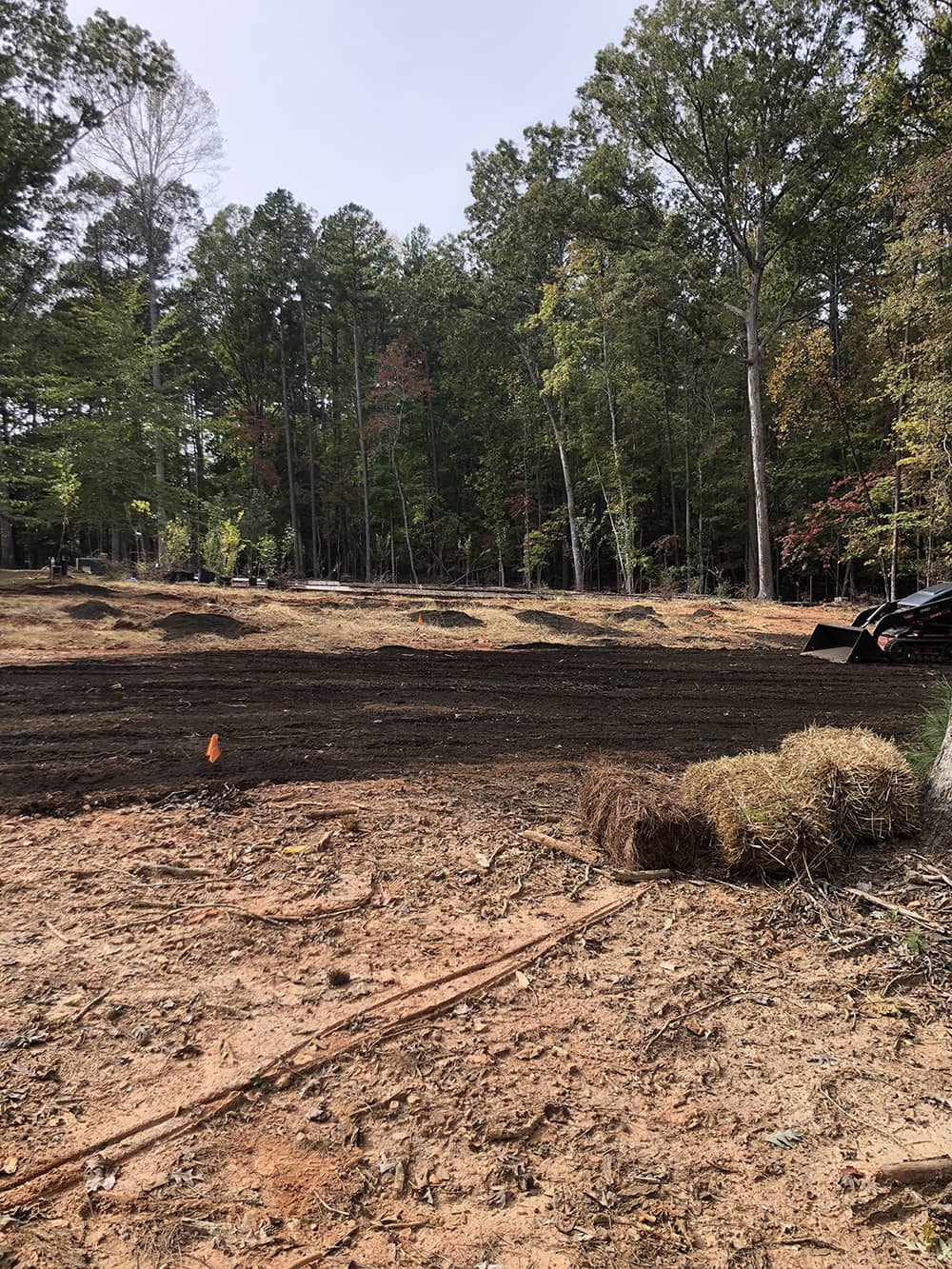
We core aerate to relieve compacted soil and open channels for seed-to-soil contact — for lawns with heavy clay, adding topsoil before seeding can make an even bigger difference — then overseed with high-quality fescue seed, using twice the seeding rate of most companies for denser, more even coverage. Expect germination in 10 to 21 days, not the faster timeline some sources quote — and if you're also planning fall weed control, know that pre-emergent and overseeding don't mix; fescue takes its time, and rushing the process (extra water, extra fertilizer) doesn't speed it up.
After Seeding
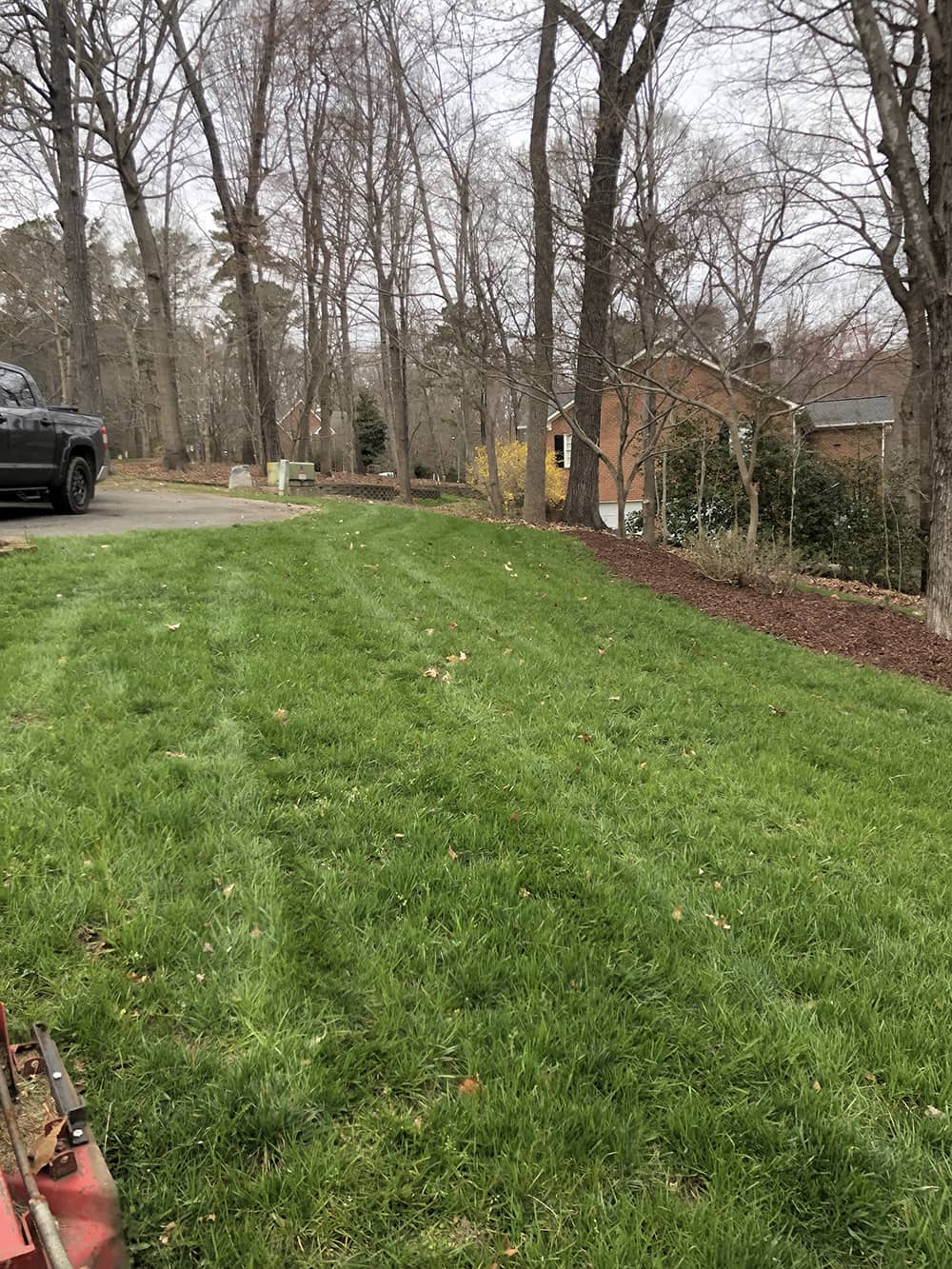
New fescue needs a light touch: keep the lawn consistently moist (not soaked) until germination, and once it's established, mow at 3.5 inches, never below 2.5" — cutting fescue too short is one of the most common reasons a good fall seeding doesn't hold through the following summer. Feeding it right matters just as much — see our fall fertilizer schedule for fescue for the exact timing.


Aeration

Seeding




Experienced

Professional

Satisfaction Guaranteed

Reliable

Friendly Customer Service

Skilled